Bringing Your Products to Life with the Happy Yesterday Font
The hum of my cutting machine is a familiar soundtrack, but today it feels different. I’m feeding it a sheet of glossy sticker paper, and on my screen, the words “Made with Love & Lavender” are dancing. They’re not just typed; they’re drawn. Each letter in “Lavender” flows into the next with a soft, graceful stroke, the capital ‘L’ boasting a gentle, open loop that feels both elegant and approachable. This is my first test print using the Happy Yesterday font, and I can already see it transforming my simple handmade soap labels into something customers will want to hold onto.
The Warm Character of Happy Yesterday
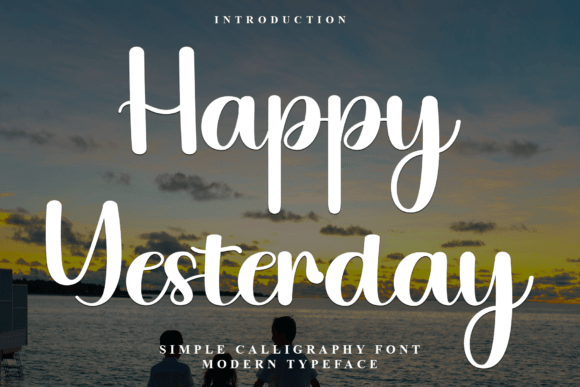
So, what exactly is Happy Yesterday? At its core, it’s a beautifully crafted script font designed with a distinctive touch. It doesn’t shout; it whispers with personality. The letters have a unique softness to their curves—they avoid the overly rigid or robotic feel of some script fonts, leaning instead into an organic, handwritten charm. This gives it a special character that feels meaningful, as if each word was thoughtfully penned just for the occasion. It carries a mood of warmth, nostalgia, and heartfelt creativity, making it incredibly versatile for makers who want their products to tell a story.
This font is a dream for display use. I’ve found it shines brightest when you let it take center stage on short phrases, names, titles, and decorative wording. It’s the perfect choice for that key line on your product that needs to evoke an emotion. Think of the main scent name on a candle label, the couple’s names on a wedding invitation, the heartfelt message on a greeting card, or the shop name on your branded packaging. The visual personality of Happy Yesterday immediately elevates the perceived quality of an item, suggesting care and artistry before a customer even touches it.
A Maker’s Toolkit: Real Uses for Your Shop
In my own small business, I’ve moved beyond the initial sticker test and started weaving Happy Yesterday into everything. The transformation is palpable. Here’s how it’s coming to life:
- Product Labels & Packaging: My candle jars now wear labels where “Bergamot & Birch” looks effortlessly chic. The font adds a boutique feel that makes my products stand out at craft fairs.
- Wedding & Stationery Suite: I recently designed a wedding welcome sign template. “Welcome to Our Beginning” in Happy Yesterday, paired with a clean sans-serif for the details, created a stunning, cohesive look the couple adored.
- Printable Wall Art & Digital Downloads: For my digital shop, phrases like “Gather” and “Coffee First” become best-selling art prints. The font’s charm translates perfectly to mockups and listing previews.
- Apparel & Merchandise: It reads beautifully on a tote bag design (“Farmer’s Market Finds”) and a cozy crewneck sweatshirt (“Campfire Stories”).
- Seasonal & Holiday Designs: From “Spooky Season” on Halloween treat bags to “Merry & Bright” on gift tags, the font adapts its warmth to any holiday aesthetic.
Readability and Practical Pairings
When working with physical products, readability is key. For small items like bottle cap stickers or intricate foil stamping, I stick to very short words or single initials in Happy Yesterday to ensure clarity. For longer text on things like invitation details or care instructions, this is where pairing is essential. I almost always team it with a simple, highly readable sans-serif or a clean serif font. This contrast lets Happy Yesterday be the beautiful star for headers and titles, while the supporting font handles the necessary information cleanly. This combo is fantastic for brand consistency across your labels, website, and social media graphics.
Essential Considerations for Creators
Before diving in and using Happy Yesterday on a product you plan to sell, take a moment to do your due diligence. This is a crucial step for any commercial craft seller or printable creator. Always check the specific licensing included with your font download. Most quality fonts for makers come with a commercial license, but it’s vital to confirm it covers your intended use—whether that’s physical products, digital templates, or merchandise. Next, explore the glyphs and alternates. Many fonts like this include swashes, alternate letterforms, and ligatures that let you customize words and avoid repetitive looks. For example, an alternate ‘y’ might be perfect for the end of a word on a wedding welcome board.
Also, ensure you have the file formats you need. For my cutting machine, I often need to convert the font to an SVG outline for precise weeding. For printed items, having OTF or TTF files ensures crisp results. Look for multilingual support if your audience is global. These details might seem small, but they are what empower you to use this tool confidently and professionally, building a brand identity that feels cohesive and intentional.
The Final Creative Touch
There’s a moment in my process that never gets old: peeling the backing paper from a freshly cut vinyl decal. Seeing the words “You are Magic” in the soft, flowing lines of Happy Yesterday come away cleanly, ready to be transferred to a planner cover, is deeply satisfying. This font isn’t just a click in a dropdown menu; it’s a design partner. It helps convey the emotion behind my products, from the joy of a birthday card to the romance of wedding stationery. For any crafter, handmade seller, or printable creator looking to infuse their work with a touch of meaningful, versatile charm, exploring a typeface like this can be a game-changer. It turns ordinary text into a signature part of your creative story.