Boter: A Unique Handwritten Font for Authentic Digital Design
In an online world often dominated by sleek geometric sans-serifs, a touch of human warmth can be a powerful differentiator. For web designers and digital product creators, typography is the primary vehicle for that warmth. It’s not just about legibility; it’s about establishing a voice before a single interaction occurs. This is where a font like Boter enters the frame. Its straightforward, distinct handwritten style offers a unique tool for crafting brand-focused web experiences that feel personal, approachable, and memorable.
Understanding Boter’s Digital Personality
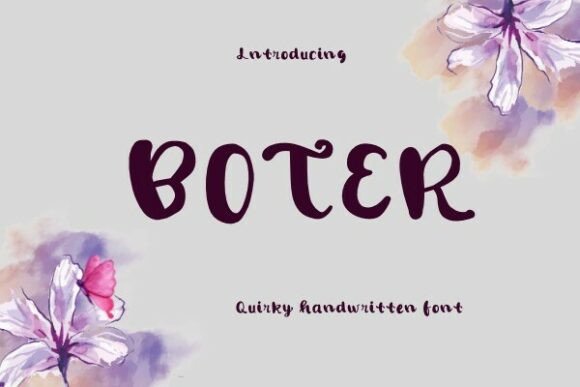
Boter is a script font that balances character with clarity. Its charm lies in its authenticity—the letterforms carry the imperfection and rhythm of actual handwriting without sacrificing readability at standard web sizes. This gives it a personality that is creative but not overly casual, friendly yet professional. For a digital creator, this means Boter can inject a brand’s tone directly into the layout. It speaks of craftsmanship, personal attention, and a human-centric approach, qualities that resonate deeply in sectors like creative portfolios, boutique e-commerce, independent SaaS tools, coaching websites, and artisanal brand stores.
Strategic Applications in Web Layouts
The practical use of a display font like Boter hinges on strategic placement to maximize impact without compromising user experience. It excels in roles where short, impactful text needs to convey personality immediately.
Hero Sections and Primary Headers
Your hero section has seconds to make an impression. Using Boter for the main headline instantly sets a human, creative, or artisanal tone. For a landing page selling handmade goods or a designer’s portfolio, Boter in the H1 creates an immediate emotional connection, distinguishing the site from corporate competitors.
Call-to-Action and Button Text
A call-to-action button with generic typography can feel transactional. Applying Boter to a key button like “Get Your Custom Quote” or “Start Your Creative Journey” can make the invitation feel personal and handwritten, potentially increasing engagement and conversion. Use it sparingly, for your primary CTA only, to maintain its special impact.
Decorative Accents and Brand Moments
Boter is perfect for short, branded phrases within a layout. Think of a motivational quote in a sidebar, a styled “Thank You” message on a confirmation page, or a decorative subheading that breaks up content sections. These small touches reinforce brand identity consistently across pages.
Readability and Technical Considerations for the Web
Any decorative font must be implemented with technical care to ensure it enhances rather than hinders the user experience.
- Size and Hierarchy: Reserve Boter for display sizes—typically 24px and above. Avoid using it for body copy. Its strength is in headlines, pull quotes, and logos, not in paragraphs.
- Mobile and Responsive Behavior: On smaller viewports, ensure Boter headlines scale appropriately and maintain ample letter-spacing. Test on real devices; sometimes slightly increasing the font-weight or size on mobile improves legibility.
- Color and Contrast: Boter’s organic forms require strong contrast. Use dark text on light backgrounds or vice-versa. Be cautious with overlays on busy images; ensure there is a solid color backdrop or heavy overlay to maintain readability.
- Webfont Performance: Confirm that the font files you license include webfont formats (typically WOFF2/WOFF). Always subset the font to include only the characters and language support you need, optimizing load times for your website or app.
Crafting Visual Harmony: Font Pairing for Digital Projects
A display font like Boter needs a supporting cast. It should be paired with a highly legible, neutral typeface for all other interface text.
- With a Simple Sans-Serif: This is the most versatile and modern approach. Pair Boter with a clean, geometric sans-serif (like Inter, Poppins, or a system font) for body text, UI labels, and navigation. The contrast creates clear hierarchy: personality upfront, clarity throughout.
- For an Editorial Feel: If your digital project is content-heavy, like a blog or online magazine, pairing Boter with a readable serif font for body copy can create a sophisticated, hybrid identity—creative yet authoritative.
The rule is simple: let Boter own the spotlight moments, and support it with typography that disappears into seamless functionality.
Building a Consistent Online Brand Identity
Typography is the backbone of visual consistency. When you deploy Boter across your digital touchpoints, you create a cohesive brand language. Use it in your site’s main logo or wordmark. Extend its use to key social media graphics, email header images, digital ad banners, and the hero sections of your sales or course pages. This repetition builds recognition. A visitor who sees your Instagram ad featuring Boter will instantly know they’ve landed on your website when they see the same typographic voice in the hero section. This consistency fosters trust and professionalism.
A Note on Licensing for Digital Use
As a professional, ensuring proper font licensing is non-negotiable. When purchasing Boter or any premium font for client projects or your own commercial sites, you must secure a license that covers web embedding. This license grants you the right to serve the font files via CSS to visitors’ browsers. It is distinct from a desktop license for print or static graphics. Always verify the license covers the intended use—whether it’s for a single client website, a SaaS product with multiple users, or a template you plan to sell. This protects your work and respects the type designer’s creation.
Ultimately, a font like Boter is more than a design asset; it’s a strategic tool. In a digital interface, where touchpoints are purely visual, the choice of typeface is the choice of brand voice. Boter offers a voice that is genuine and engaging. By applying it with purpose—focusing on hierarchy, pairing it wisely, and ensuring technical fidelity—you can create online experiences that don’t just function well but feel uniquely human. That feeling is what turns visitors into customers and users into advocates.